Japchae
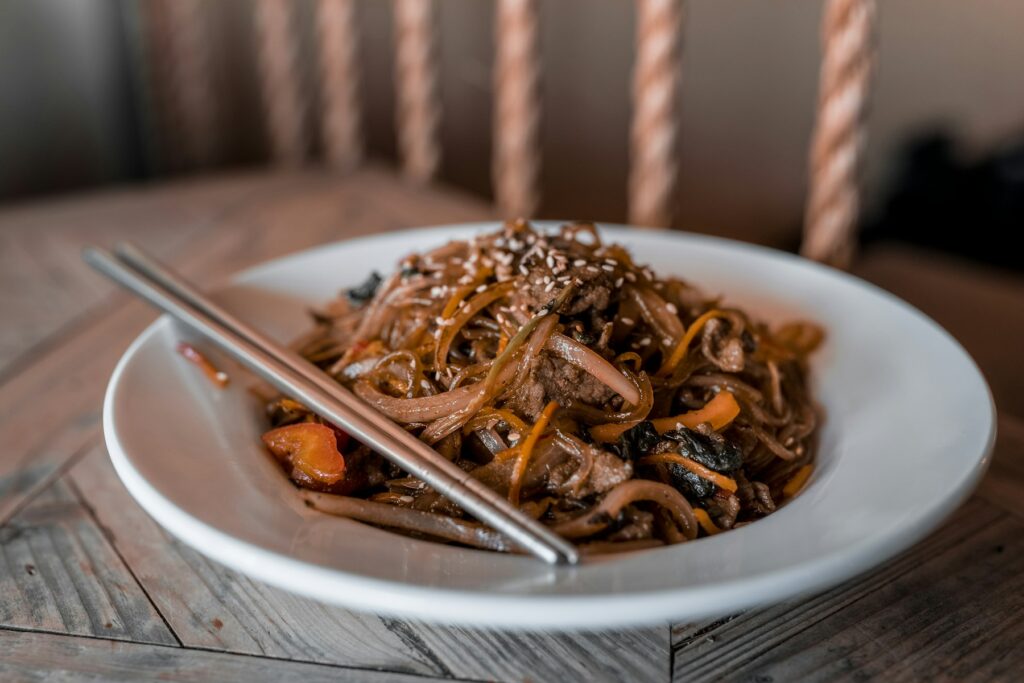
Japchae is a bright, colorful Korean noodle dish made with an abundance of mixed vegetables, well-seasoned meat, and a sesame-forward dressing. This sort of stir-fry is made with sweet potato noodles which have a unique chewy texture. Sweet Potato starch noodles are gluten-free, so this recipe can be made vegetarian and/or vegan by leaving out the meat and egg.
- Serves
- 4
Directions
-
Place the chicken strips into a medium bowl. Toss with the chicken marinade. Cover the bowl with cling wrap and set aside.
-
In a large bowl, marinate the sliced mushrooms with half the mushroom and noodle marinade. Toss them well and set aside.
-
Bring a pot of water to a boil, add the spinach to blanch for 2 minutes. Drain the spinach and rinse under cold tap water to stop the cooking. Squeeze the spinach to remove as much excess water as possible and place in a large mixing bowl. Toss with a sprinkle of salt and pepper, and 1 teaspoon of minced garlic. Set aside.
-
In a medium pot, bring water to a boil. Add the noodles and boil them for 6 minutes or cook according to directions. Drain the water. Rinse under cold water to cool down and run under cooled water to cool.
-
Use kitchen shears to cut the noodles a few times into 6 inches lengths and set aside in a small bowl with the other half of the mushroom and noodle marinade. Use tongs to flip and loosely separate the noodles. They will naturally be a little starchy.
-
Note: Each ingredient will be cooked individually in a large skillet and moved into the bowl with the mushrooms and noodles. Add additional oil for each cook as necessary. This ensures proper cooking of each ingredient.
-
In a small bowl, whisk the egg white with a fork. Add 1 teaspoon of vegetable oil to the skillet. When it’s hot, pour the egg white in like making a fried egg. Cook on low heat 1-2 minutes on each side until just firm. Transfer it onto a plate and set aside.
-
In the small bowl, whisk the egg yolk with a fork. If necessary, add more cooking oil onto the pan and heat up. Cook on low heat 1-2 minutes on each side until just firm. Transfer it to the plate with the egg white. Set aside.
-
Add a little more oil to the pan. Cook the onion with a pinch of salt over low to medium heat until softened, about 3-4 minutes. Transfer onions to the mixing bowl with the spinach.
-
Add oil, if necessary. Cook the carrots with a sprinkle of salt and pepper over medium heat until they soften, about 3-4 mins. Transfer it to the bowl. Cook the red bell pepper over low to medium heat until tender, 2-3 mins. Transfer into the mixing bowl.
-
Pour in the marinated mushrooms, including the sauce from the bowl. Stir fry until the liquid is released and evaporated, about 3 minutes over low to medium heat. Transfer into the spinach-onion mixture.
-
Add more oil to the skillet over medium heat. Add the chicken with all the marinade and stir fry until it is just cooked to medium rare, 3 minutes. Use tongs toss the meat and all the sauce into the vegetable mixture.
-
Finally. Stir fry the marinated noodles until they are well coated with the sauce, 2-3 minutes over low to medium heat. They should not be crispy or crunchy, just thoroughly heated, but soft. Use tongs to toss the noodles into the mixture.
-
Thinly slice the egg white and egg yolk into match sticks. Add them into the mixture and gently toss until fully combined.
-
Drizzle with 1 teaspoon of sesame oil and sprinkle sesame seeds over top.
-
Serve immediately.
-
Essential Ingredients
-
Dang Myun Noodles: Sweet potato glass noodles is a type of noodle made from purified sweet potato starch and water. They have a greyish color and is opaque when they are uncooked but become translucent when cooked. It also becomes thick and chewy when cooked. They're essential for making japchae. The noodles come in large dried bundles and are hard to separate. However, there is a pre-cut version that is easy to use as well. So look out for those if you can.
-
Doenjang: Soybean paste is often compared with Japanese miso paste. It is made with fermented soybeans over a period of time. It has natural pungent smell and flavor. It is mainly used in soup & stew but it can also be used as a sauce when making side dishes.
-
Gochugaru: Ground dried Korean chilis.
-
Gochujang: The spicy, sweet, savory, and salty Korean condiment is made from fermented red peppers, fermented soybeans, and glutinous rice. The fermentation process converts the rice starch into sugar, resulting in a mild sweetness. Gochujang has a thick, sticky texture and a spice level that can range from medium to very hot, depending on the brand.
-
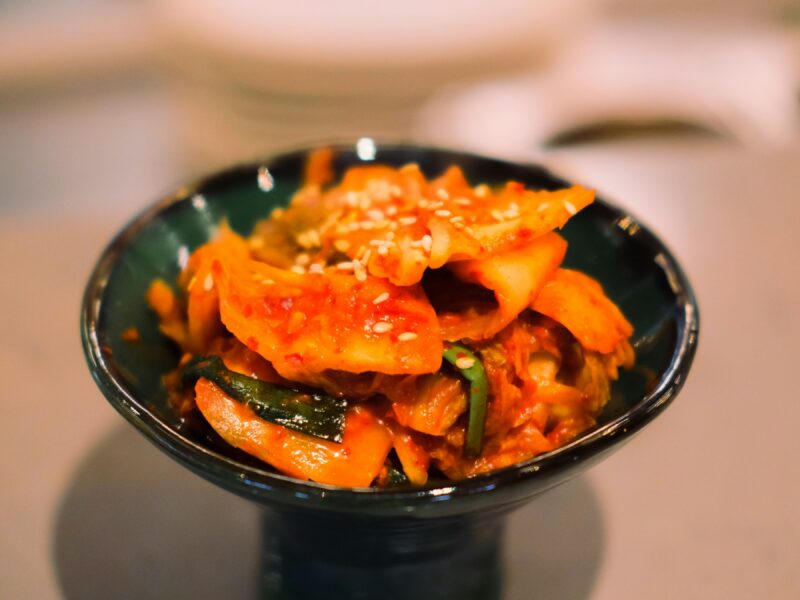
Kimchi: A traditional Korean dish of fermented vegetables that is crunchy and tangy. It's often made with napa cabbage or Korean radish, and also includes green onions, garlic, ginger, and other seasonings. Kimchi can be eaten as a side dish or main dish, and it's also used in soups, stews, and as mandu filling.
-
Korean Fish Cake: Korean fish cakes are commonly used in stir fry, soups, and as part of banchan (Korean appetizers). They are available in different shapes: square, rectangle, round.
-
Korean Radish: The white radish is a variety of Daikon radish. Korean radish tends to be shorter and rounder than the bigger, longer Daikon radish. It also has some shades of green. If I can’t get Korean radish, I just use daikon radish instead
-
Perilla Leaves: The Asian herb taste like a combination of basil and mint.
-
Ssamjang: Spicy dipping sauce is the most common accompaniment with grilled Korean BBQ. It can be easily made at home using soybean paste, chili paste, garlic, onion, and sesame oil. As with chili paste (Gochujang) and soybean paste (Doenjang), there are various versions of spicy dipping sauce available.
From Shawnie's class “Korean at Home”