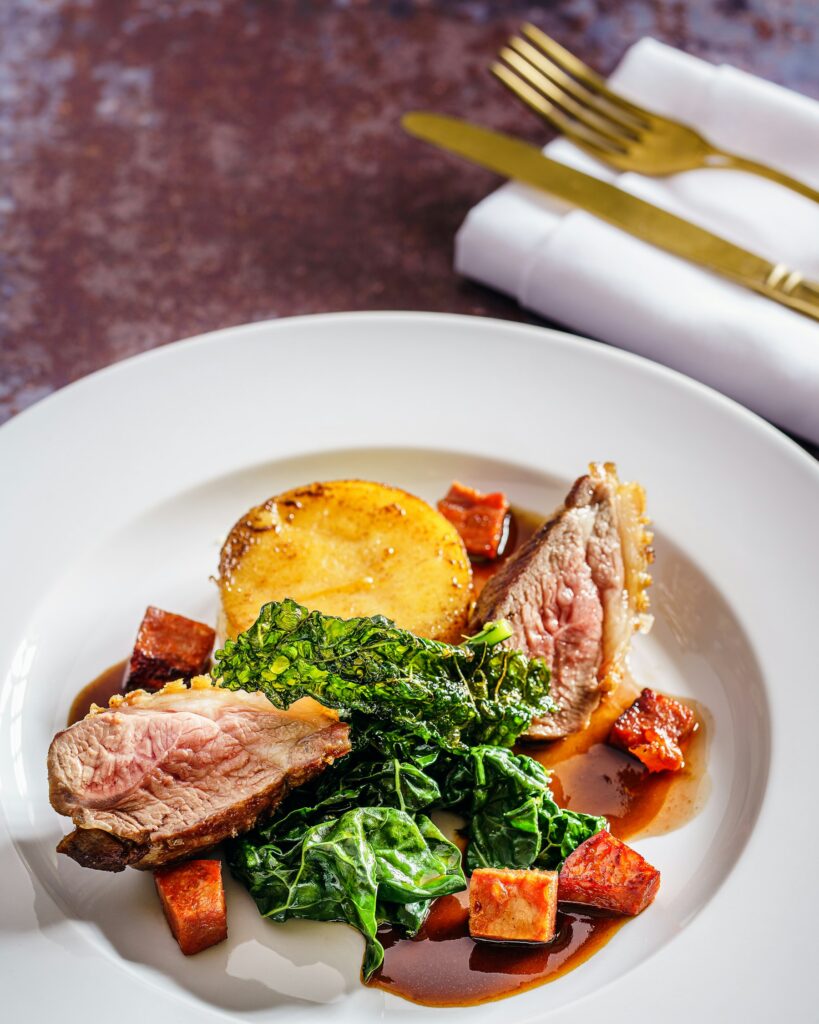
Duck Breast with Port Wine and Cherry Reduction
Duck’s rich-tasting meat and fatty skin pairs particularly well with sweet or sour flavors. That is why it is common to serve duck with fruit-based or acidic sauces to cut through the richness. Before cooking, duck fat should always be scored or pricked with a fork to facilitate rendering. The fat is not marbled into the meat, so it can easily be removed from the surface of a raw duck, if deboning the meat before cooking. When it’s time to serve the breast, cut it against the grain of the meat in relatively narrow widths. This helps tenderize the breast while keeping it juicy.
- Serves
- 4
Directions
-
To prepare duck: Place duck breast halves between 2 sheets of plastic wrap. Pound lightly to even thickness (to about 3/4 inch). Discard plastic wrap.
-
Using a sharp knife, Score the skin (but not the meat) in a crosshatch diamond pattern, spacing the scores every 1/2 inch; this helps the fat render and will give you a crispier skin. Can be done 8 hours ahead. Cover and chill.
-
Generously season duck breasts with salt and pepper.
-
To encourage crisp skin, begin with a cold, dry pan and use a medium-low heat to slowly render down the fat. While cooking, a lot of fat will be produced. Pour or spoon this off regularly into a bowl or jar and keep for later use.
-
Cook skin-side down for 6 to 8 minutes, flip over and cook flesh side down for 2 to 4 minutes more. A thermometer should read an internal temperature of 135 F.
-
Transfer breasts to a cutting board. Tent loosely with foil to keep warm.
-
To make pan sauce: Pour off all but 1 tablespoon of fat from skillet, add butter and return to medium heat. Add shallot and cook, stirring frequently, until softened, about 1 minute. Add broth, port, vinegar, preserves, and cherries.
-
Cook, scraping the bottom of the skillet to release browned bits. Simmer sauce until thickened. Taste and adjust seasoning with salt and pepper. Keep warm over low heat.
-
To serve: Slice breasts into 1/4-inch-thick slices on the diagonal using a sharp knife.
-
Divide slices evenly between 4 plates, fanning and slightly overlapping the slices. Ladle sauce over the duck slices.
-
Why is duck meat so greasy?
-
Ducks and geese are waterfowl, so they have an ample fat layer beneath the skin that keeps them buoyant and warm in cold waters. Unlike chickens, ducks are migratory, meaning they’ve evolved to use their bodies for long journeys. This exertion gives ducks lean, strong muscles, especially those of the hard-working breasts, which have a deep red wine color and almost chewy texture.
-
Duck, much like the turkey, has differing degrees of dark meat, though duck meat in general is much darker, closer to lamb or beef, with myoglobin giving it a rich purple color. Even so, the breast is still lighter and should cooked only to 135 F (57 C) to avoid drying out the meat. The thighs and legs, on the other hand, should be heated to 165 F if roasting a whole duck.
-
You may see 135 F and think that temperature is much too low for poultry. Generally, you’d be correct. The USDA recommends 165 F internal temperature for all poultry. But because duck is not a common carrier of salmonella and its meat is more akin to lamb or beef, rare to medium is the preference when it comes to cooking duck breast. And, with medium rare being around 135 F, this fits perfectly with the cooking of this fatty fowl.
-
Wine pairings
-
Duck meat needs a wine with sharpness and acidity to cut through its fattiness and the sweetness of the sauce.
-
Oregon pinot noir: Its acidity best balances out the fattiness of the duck.
-
Spanish Rioja: Medium-bodied red with black cherry flavors and smoky notes
-
California zinfandel: The fruity grape has just enough tannins to balance the fat but not overpower with sweetness.
-
French rosé: A dry, full bodied rosé or sparkling rosé, particularly from the Rhone region, has mellow tannins and acidity that pair well with duck.
-
Pinot gris: Slightly dry and aromatic white wine that can cope with the oiliness of duck.
From Shawnie's class “Cooking with Wine: Valentine’s Edition”