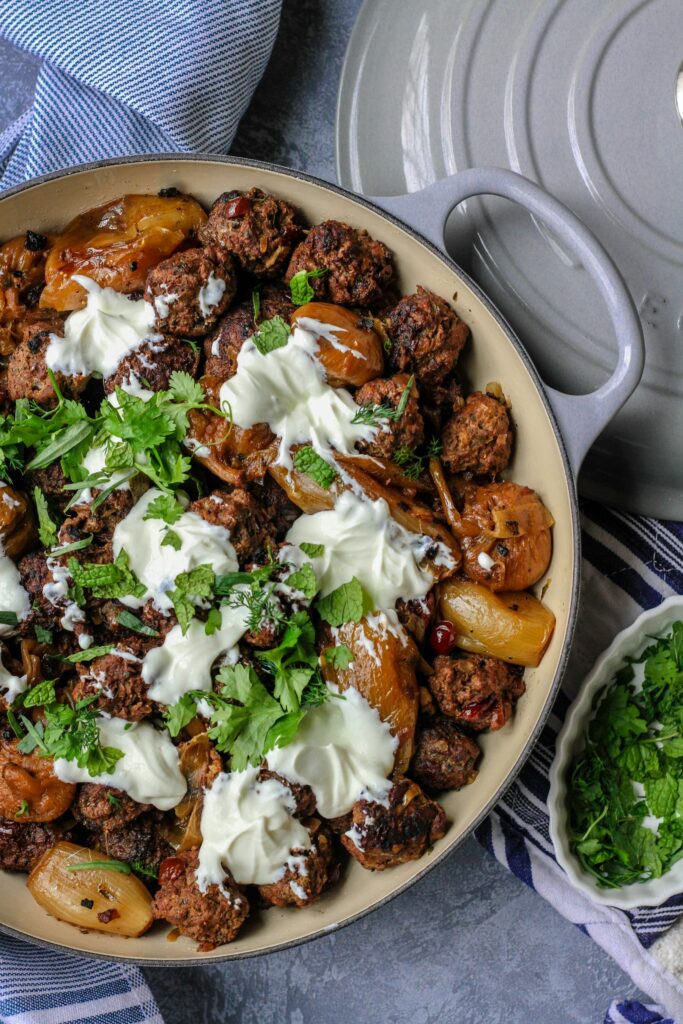
Moroccan Lamb Meatballs with Herbed Yogurt Sauce
Ras el hanout is a complex spice blend comparable to curry or BBQ rubs and found is varying forms in Moroccan, Tunisian, and Algerian dishes. The heat and flavor profiles vary between families, shops, and regions. It incorporates many spices, roots, barks and flowers ranging from chili peppers, ginger, paprika, and turmeric to coriander, nutmeg, allspice, and fenugreek. It can range from hot and spicy to rich and warm. Garlic, nuts, and dry herbs are not usually included. Ras al hanout in Arabic means “head of the shop” and implies a mixture of the best spices the seller or household has to offer.
Couscous is made from semolina flour from durum wheat that has been ground, moistened, and rolled into granules, which makes it a pasta and not a grain. There are three different types of couscous: Moroccan, which is the smallest; Israeli or pearl couscous, about the size of peppercorns; and Lebanese, the largest of the three. Moroccan couscous is traditionally served with a stew spooned around it.
Preserved Lemon or pickled lemon is a condiment that is common in North African cuisine. Lemons are halved and placed into jar with various spices like coriander and peppercorns; then packed with salt. This process will brine the lemons, releasing their juices into the salt. A few weeks later, the cured lemons are rinsed, and the peel is chopped for use in a variety of dishes.
Tagine (also, tajine or maraq) is a true one pot wonder where savory stews, made with meat, poultry, or fish together with vegetables or fruit are slow-cooked in a traditional cone-shaped clay cooker. Tagine is the cooking vessel after which the dish is named. Because its domed or cone-shaped lid traps steam and returns the condensed liquid to the pot, a minimal amount of water is needed to cook meats and vegetables. This method of cooking is important in areas where water supplies are limited. It’s all about building a flavorful stew to be served over couscous, pilaf, or with bread.
Moroccan Lamb Meatballs with Herbed Yogurt Sauce
This recipe was inspired by my earliest experiences with Moroccan food while living in Nice, France. The spice market in Marseilles is a sensory overload with stalls full of tagines cooking over charcoals, and fish and vegetable stews served over saffron-laced couscous. Not always having time to cook a lamb tagine low and slow for hours, I’ve developed this meatball dish that evokes similar flavors but takes only 30 minutes from start to finish. As an alternative to couscous, serve the meatballs with yogurt sauce and vegetables in pita bread pockets.
- Yield
- 20 meatballs / Serves 4
Directions
-
For the ras al hanout
-
In a bowl, stir all the spices until thoroughly combined. Store in an airtight container or jar for up to a month in a dry place. Makes 1/2 cup.
-
For the meatballs
-
In a large bowl, use a spatula to break up the raw lamb. Stir vigorously to activate the meat’s myosin, which will develop stickiness which helps to bind the meatballs. Stir in the onions, garlic, breadcrumbs, spices, salt, and pepper. Mix until thoroughly combined.
-
Measure out a heaping tablespoon of the mixture and roll into a ball. They should weigh just under an ounce per meatball. Repeat with the remaining mixture. This recipe makes 20 -22 meatballs depending on how big they are rolled.
-
In a large skillet, add half the oil over medium heat. When the oil is shimmering, add half the meatballs and cook for 8-10 minutes, using tongs to sear on all sides. Remove cooked meatballs and juices to a shallow bowl and tent cover with foil to keep warm. Repeat with the remaining meatballs. Keep warmed until ready to serve with couscous or in pita pockets.
-
For the yogurt sauce
-
In a wire mesh strainer lined with cheesecloth, add the yogurt, salt and pepper. Allow to drain for at least 1 hour (or up to overnight in the refrigerator) to thicken the yogurt. Stir in the lemon juice, garlic, mint, and parsley. Keep refrigerated until ready to serve.
From Shawnie's class “Culinary Crossroads: The French Moroccan Table”