Directions
-
In a small bowl, add the warm water and sprinkle the yeast over it, then whisk vigorously for 30 seconds. The yeast should dissolve in the water and the mixture should quickly foam. If it doesn’t and the yeast granules float, the yeast is “dead” and should be discarded. Start over with a fresh yeast and water.
-
In the bowl of a stand mixer fitted with the dough hook, combine the flour, malt, and salt.
-
With the mixer running on the lowest speed, pour in 1 1/8 cup of the ice water, reserving two tablespoons. Add the yeast mixture. Use the reserved ice water to dislodge any bits of yeast from the yeast bowl, swirl it around and add to the mixer. Mix on low for about 30 seconds, stop the mixer, then add the Poolish.
-
Continue to mix the dough at the lowest speed for one minute, until most of the dough comes together around the hook. Stop the mixer. Pull away any dough clinging to the hook and scrape the sides and bottom of the bowl with a scraper or spatula.
-
Stop the mixer, scrape down the dough off the hook, and add the olive oil. Mix the dough for two minutes, stopping the mixer from time to time to scrape down the dough until all of the oil is thoroughly combined. The dough won’t look completely smooth.
-
Coat a baking sheet with a thin layer of olive oil. Using the bowl scraper, scrape the dough onto the prepared pan. The dough will be extremely tacky—too sticky to knead.
-
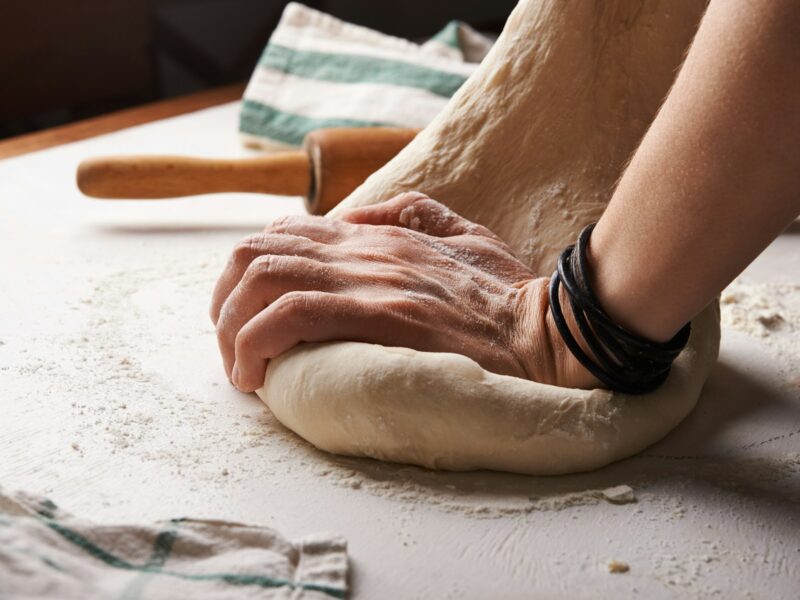
Dampen your hands and stretch and fold the dough into the sheet pan.
-
Cover the pan with plastic wrap and let the dough rest at room temperature for 20 minutes.
-
Use a dough cutter to loosen the dough and move it to the scale. Weigh the dough, adjusting the quantity of dough as necessary for the recipe. You will need 35 ounces (990 grams) for making any of the pizzas.
-
If making two loaves Ciabatta, weigh out two 20 ounce loaves (about 550 grams each). You may have a little dough left over.
-
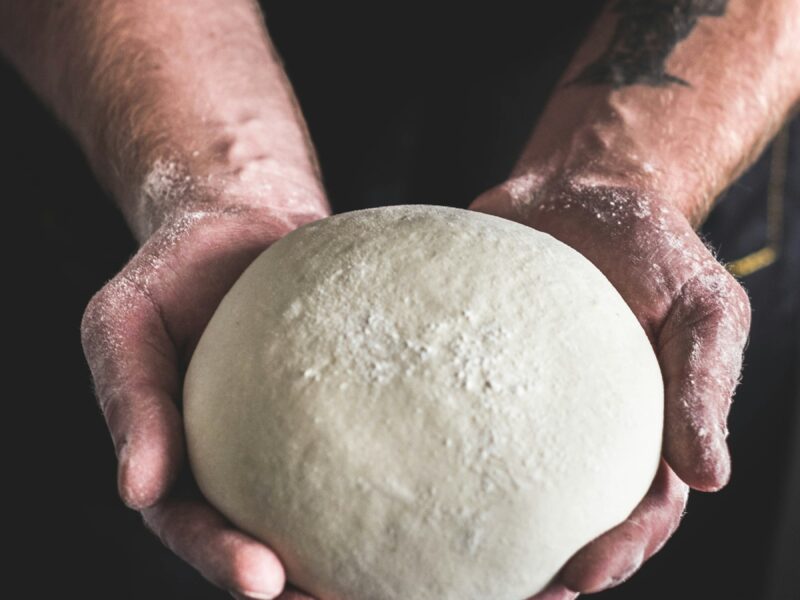
Form the dough into a pizza ball or multiple balls and place them on the oiled sheet pan (spacing them four inches apart if you have made two balls). Wrap the pan airtight with a double layer of plastic wrap, sealing the wrap well under the pan.
-
Refrigerate for 24 to 48 hours.
-
Bake the Neapolitan Pizza
-
Dust the work surface with the dusting mixture, then move the dough to the surface and dust the top.
-
Sprinkle a wooden peel with the dusting mixture.
-
Roll out the dough into 9 to 15-inch rounds depending on your preference of size. Flatten the edge, then using a fork, dock the surface of the dough to prevent bubbles and doming.
-
Move the dough to the peel. Shake the peel forward and backward every so often to ensure the dough isn’t sticking.
-
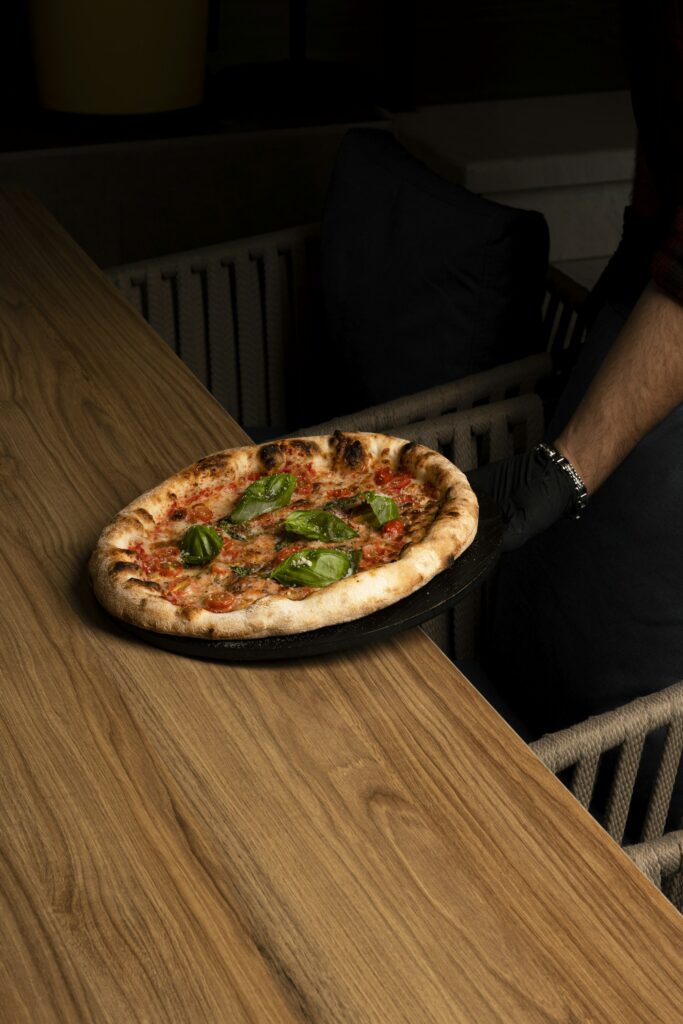
Add toppings and then cook for 15-20 minutes for individual sized pizzas or 25-30 for full sized pizzas.
-
Pre-Bake Sicilian Dough
-
Remove the dough ball from the refrigerator and let it come to room temperature which should take 1 to 2 hours.
-
Pour 3 tablespoons of olive oil into the center of a well-seasoned 12-inch-by-18-inch steel Sicilian pan or baking sheet.
-
The dough is very sticky, so the easiest way to remove it from the sheet pan is to hold the pan with the dough upside down over the baking sheet and use a scraper to release the dough, letting it fall into the pan. Using the bowl scraper, flip the dough over to coat both sides with the oil.
-
Using flat, fully extended fingers of both hands, press the dough outward in all directions, beginning in the center and extending it toward the corners of the pan to make an even layer. If you work gently, the dough should stretch without tearing. Don’t worry if the dough doesn’t reach the corners.
-
Let rest for 30 minutes uncovered in a warm spot.
-
After resting, the dough is ready to push outward a second time. It will not be degassed, so press lightly with your fingers and palm of hand to push the dough, repositioning it in the pan to achieve an even thickness and to reach to the corners.
-
Let the dough rest again, still uncovered, for 1 1/2 to 2 hours, until it has risen almost to the rim of the pan. The timing will depend on the temperature of the room and humidity.
-
Meanwhile, set up the oven with a pizza stone preheated to 450°F for 1 hour.
-
Set the pan on top of the stone and bake for 7 minutes. Rotate the pan 180 degrees and bake for another 7 minutes, until the top of the crust is a rich golden brown.
-
Remove the pan from the oven and use a wide metal spatula to lift a side of the crust to see if it is sticking to the pan. If it is, drizzle a little oil around the sides of the pan to help loosen it. Run the spatula around the edges under the entire crust to be sure it isn’t sticking and has completely releases from the pan. If the bottom sticks or is not a golden brown, allow it to bake another 1 to 2 minutes.
-
Take the crust out of the pan and let rest on a cooling rack for 15 minutes to steam through.
-
When ready to finish the pizza, if the oven is cool, preheat it to 450°F for 1 hour.
-
Return the parbaked crust to the pan, add toppings and cheese, then return to the oven to bake on the stone for 10-12 minutes, based on the toppings.
From Shawnie's class “Artisan Italian Pizza At Home”